Since my coming of age (BMX-wise) in the 80s, the rule of thumb was: the taller the dude, the longer the crank.
Bigger was better, especially if you were tall and snapping gates at the BMX track on the weekend.
Back then, BMX racers could be seen running 180mm, 185mm…heck, I even remember someone sporting 190s! (DD Leone?)
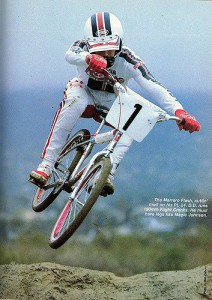
In freestyle, things were a little different.
Crank arm length didn’t mean too much for tricksters. I think most freestyle guys opted –for the most part– the middle-of-the-road 175s and called it a day.
In flatland, there was a bit more experimentation with crank length.
I believe Dennis McCoy was one of the first to opt for shorter cranks.
The reason?
To help roll out of tricks easier.
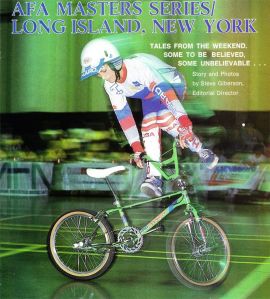
Seems legit. Although how far this was embraced I couldn’t say. I’m guessing it wasn’t that widespread.
Fast forward to the modern day….
In racing, spin-to-win clip pedals and more technical tracks prompted some racers to revert back to shorter 175mm cranks.
In freestyle, not so much change (most were rocking 175s anyway).
Or so I thought.
BMX Union recently posted a tech tip on behalf of Profile Racing that seems to throw some of that conventional thinking about cranks on its head.
Turns out, short cranks might be beneficial for everybody….including tall dudes.
What??!!
Stick with me here.
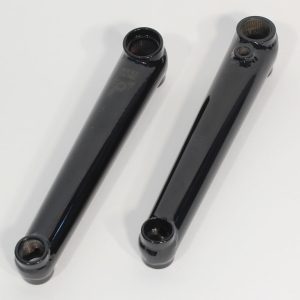
According to Profile, the advantages of short cranks are:
1. Shorter cranks allow you to bunny hop higher. As a simple experiment, try jumping with your feet spread apart, then try with your feet closer together (as if being in a position for pedaling). You can always jump higher with your feet closer together.
2. Ambidextrous spinning: It’s much easier to 180 (360, 540 etc…) both ways with your feet closer together.
3. Lighter weight: The shorter the crank, the less steel used in its tubular construction.
4. More rigid/less flex: Shorter cranks should, in theory, last longer over time because there’s less leverage put upon them.
x
They even have a testimonial from a 6’4″ rider, Zachery Rogers, who sports 165mm cranks on his ride:
I made the move on a recommendation from Matt Coplon. Shorter cranks help move my feet closer together which is a huge benefit with peg clearance vs. size 14 shoes. It also allows for more control over my bike in reference to spins/responsiveness.”
More clearance, control, responsiveness…and higher hops?
Color me intrigued.
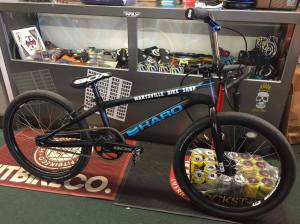
Apparently DK already got the memo. Their new 22″ Vega comes stock with 170mm cranks.
When I first saw its spec list I was a bit surprised. But apparently they’re right on trend!
I’m kinda curious to find out how widespread this move is to shorter cranks.
Would you switch to (or do you run) shorter cranks?
(Italicized excerpts from BMX Union)



 big and tall bmx